The Future of Esports.
A Stadium Redefined
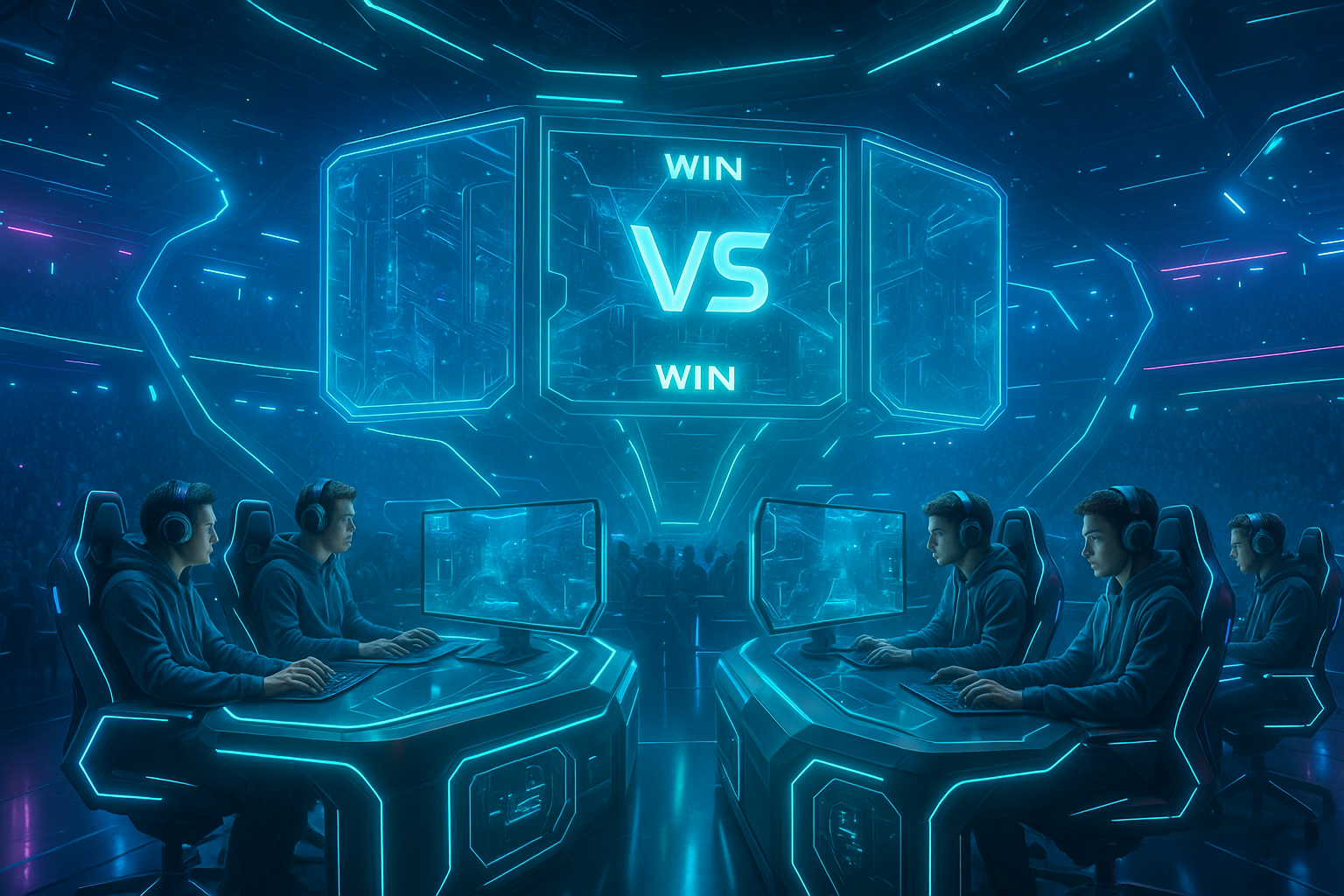
Imagine a packed stadium where tens of thousands of fans are cheering, commentators are shouting play-by-play, and millions more are watching online. Only instead of it being a national sport, it is professional video game competitors battling it out on screens. A couple of decades ago, watching other people play video games might have seemed unusual, but today it has become one of the fastest-growing forms of entertainment in the world.
Competitive gaming—now widely known as esports—is currently filling professional arenas and streaming online to global audiences. What began as small groups of gamers competing for fun has evolved into a billion-dollar industry. Similar to traditional sports like NFL or NBA, esports generates the same energy and excitement. Fans do not simply follow the games—they follow the teams, the players, and the evolving stories that unfold across major competitions.
With momentum driven by new technology, increased fan engagement, and expanding college and league support, esports is positioned to become a dominant form of entertainment that may eventually rival traditional sports in cultural relevance and global popularity.
From Local Tournaments to Global Arenas
Esports has evolved significantly since its early beginnings. In the late 1980s and early 1990s, tournaments were largely local events, often played at small gatherings or LAN competitions. However, the industry’s major turning point came with the expansion of online streaming. Platforms like Twitch and YouTube Gaming made professional gameplay accessible worldwide, allowing audiences to tune in from anywhere. This accessibility shifted competitive gaming from a side interest to mainstream entertainment.
The financial growth of esports reflects this shift clearly:
In 2024, the global esports market was valued at approximately $2.13 billion according to Grand View Research.
Projections estimate the market could reach $7.46 billion by 2030.
More ambitious forecasts from Future Market Insights predict the industry may climb to $25.4 billion by 2035 if growth continues at its current trajectory.
Events such as major international tournaments including the largest prize-pool esports championship, The International, or flagship global competitions like the League of Legends World Championship, demonstrate how far the ecosystem has advanced. Experts continue to emphasize that esports remains in its early expansion stages, with ample space for continued evolution.
Additionally, developments in AI and interactive systems, including analytical innovation referenced by USC Annenberg, are expected to shift audience participation and the overall experience of esports events in the coming decades.
The Human Side of Competitive Gaming
Esports is more than a digital activity—it is a culture influenced by players, coaches, and global fan communities.
Player Perspective
Colorado Mesa University competitor Liam Habadek describes the daily preparation cycle of a competitive gaming athlete:
“We have a two-hour sprint block for playing, then an hour to watch past games and discuss concerns.”
Liam also reinforces a principle long understood in traditional sports:
“Just like any other sport, teamwork is key. You can have a super team on paper, but if they don’t work well together, it won't succeed long-term.”
These statements emphasize the discipline and collective coordination now common in esports training pipelines.
Coaching and Mental Preparation
Head esports coach Lindsay Chasklas highlights the importance of mindset and communication within team performance:
“As much as we want to compete, sometimes you have to take a deep breath and remember it's a game.”
Lindsay also references program growth across academic institutions offering scholarships—an increasing number of universities now recruit and support students through esports initiatives similar to football or basketball pathways.
Today’s students can:
Attend college on esports scholarships
Compete at elite levels
Develop into scholar-athletes
Transition into esports careers including production and management
Esports has begun to add new layers of educational access, community outreach, and competitive legitimacy for younger generations.
The Fan Perspective and Cultural Growth
Esports fandom has grown into a recognizable global identity system similar to traditional sports communities. Fan Riley Pert, an enthusiastic viewer, shares why he follows esports teams:
“I watch certain teams because they play the same games I do. It feels relatable, and I love the way they play.”
Streaming platforms like Twitch and YouTube Gaming support community building, accessibility, and fandom participation.
Competitions now feature:
Major live events
Team jerseys
Large audiences
Connected online communities
While it may take years to rival established sports infrastructure, Riley maintains esports is trending toward wider cultural recognition and relevance.
The Next Era
Esports is no longer a niche hobby—it has become one of the most impactful entertainment industries worldwide. With innovations in VR, AR, and continued AI advancements, competitions are expected to become more immersive, more strategic, and more engaging for participants and viewers alike.
Looking forward, the industry may introduce:
Expanded scholarship programs
Larger competitive leagues
More immersive tournament experiences
Careers centered around esports event ecosystems
International cultural relevance similar to traditional sports
As Liam notes:
“Success depends not only on skill but teamwork and community.”
Open Discussion
As esports continues to evolve, do you believe it will become as culturally influential as traditional sports like football or basketball in the next 20 years?
Sources
Grand View Research
Future Market Insights
USC Annenberg
